Cheapest Universities in South Africa
Are you looking for a low-cost international university in South Africa? The expense of higher education in South Africa is cheaper than most people outside of the continent believe. You won’t believe how many of South Africa’s low-cost higher education institutions are internationally renowned academic giants.
When compared to other study abroad destinations, tuition fees for international students in South Africa are fairly low and economical. South African institutions provide a high-quality education at a moderate cost. International students can expect to spend between $2,500 and $4,500 per academic year for undergraduate programs and $2,700 to $3,000 for postgraduate education.
1. University of Cape Town (UCT)
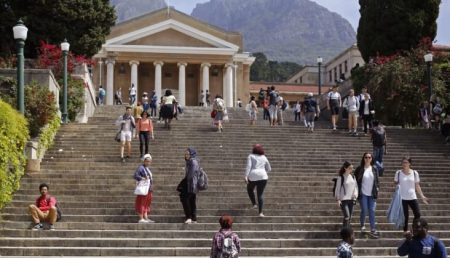
The University of Cape Town is one of the greatest in South Africa. It is the country’s oldest public university, having been founded nearly two centuries ago in 1829.
In the QS World University Rankings, it was ranked 198th overall and 22nd among the BRICS (China, South Africa, Brazil, Russia, and India), a group of five large emerging countries.
It is organized into six faculties, each of which has over 50 departments. There are 36 sports clubs and 80 student organizations to choose from for extracurricular activities.
In 2016, approximately 30,000 students were enrolled, with 4,674 international students accounting for 17.7% of the total.
On their website, there is a section dedicated to international visitors.
There, they go over the application process and requirements. In addition to bachelor’s and postgraduate programs, they provide short academic programs. All of the classes are taught in English. They also have their institution, but with only 6,000 spots available, it is in high demand.
In 2019, tuition fees for international students will be R 90,000 (about $6,400) per year. With a tuition of $6,400 per year for quality education, the University of Cape Town is one of the cheapest universities in South Africa. UCT offers scholarships to both domestic and international students who require financial support to pay for their studies.
All information can be seen here http://www.students.uct.ac.za/sites/default/files/image_tool/images/434/fees_funding/fees/downloads/2021_fees_payment_dates.pdf
2. University of the Witwatersrand
The Institution of the Witwatersrand, or Wits, is South Africa’s third-oldest university, having been founded in 1896. In the QS World University Rankings, this low-cost university in South Africa was placed 400th and 40th in the BRICS.
It includes five campuses in the city of Johannesburg. The first two are located in Braamfontein, and the others are located in Park Town. Five faculties, 14 museums, one planetarium, two main libraries, and 12 additional faculties-owned libraries round up the campus. One of the six residencies is open to all students.
To apply to Wits, you must first apply for a Matriculation Exemption, then fill out the online application form, attach the necessary documents, and pay the application fee online on https://www.wits.ac.za/internationalstudents/financial-information/fee-structure/
3. University of Pretoria
Another inexpensive public university in South Africa is the Institution of Pretoria, which was created in 1908 after Wits. In the QS World University Ranking, it is placed 45th among the BRICS countries and 561st overall.
This institution has nine faculties, a business school, various libraries, and museums. It is one of South Africa’s largest institutions, having seven campuses in Pretoria and Johannesburg and about 49,000 students. In addition, there are 27 undergraduate and postgraduate dormitories.
In terms of activities, they have 30 sports clubs, over 100 student clubs, and ten sports academies. The University of Pretoria is the country’s leading research institution, with well-known postgraduate degree programs.
The application process is done on https://www.up.ac.za/international-cooperation-division
Studying in South Africa on a budget — what the fees above actually mean
Tuition is only one line in the budget, and on its own it is a poor guide to whether you can afford to study in South Africa. A country with low tuition and high living costs can end up more expensive than one with higher tuition and cheap accommodation. Work out the total annual cost before you compare anywhere.
How to check a tuition figure before you rely on it
Fee figures on any website — including this one — go out of date. Universities revise tuition annually, and governments change policy. Before you rely on a number:
- Open the university’s own website and find the fees page for international or non-national students. That is the only figure that counts.
- Check the academic year the figure applies to. A 2023 fee table tells you very little about what you will pay in 2026/2027.
- Confirm whether the price is per year, per semester or per credit. Per-credit pricing is common and makes cheap-looking programmes expensive.
- Check whether international students pay a different rate. In many systems local and EU students pay far less than everyone else.
- Email the admissions office and keep the reply. A written quote protects you.
A live example of why this matters: Norway’s public universities were free for everyone until 2023, when parliament introduced cost-covering fees for non-EU/EEA students — and non-European enrolment fell by roughly 80% within two years. In June 2025 the government proposed letting institutions set their own fees again, including at zero, from August 2026. Anyone relying on a five-year-old “tuition-free” article would have got it badly wrong in both directions.
Entry route: you will need a study permit or student visa for South Africa. Requirements for Nigerian applicants typically include an admission letter, proof that you can fund tuition and living costs, a valid passport, medical clearance and a police report. Processing times vary considerably, so start once you hold a firm offer — not after.
Language of instruction: English is an official or primary language of instruction in South Africa, so you will not face a language barrier in the classroom. Many institutions also waive IELTS or TOEFL where your previous degree was taught in English — and Nigerian universities teach in English. Ask the admissions office directly whether your Nigerian certificate qualifies for a waiver before you pay for a test.
Build a realistic total-cost budget
Before applying to any institution in South Africa, price all of the following. Applicants routinely underestimate the second half of this list:
- Tuition for international students, for the correct academic year
- Application and acceptance fees, which are usually non-refundable
- Accommodation — on-campus versus private rent can differ enormously
- Living costs — food, transport, data, utilities
- Health insurance, which is compulsory in most study destinations
- Visa or permit fees, plus biometrics and courier charges
- Flights, and a return flight if the visa requires proof of one
- Proof of funds — money you must show you hold, on top of what you actually spend
- Document costs — transcripts, notarisation, apostille, translation, courier
- The naira exchange rate, and how a further depreciation would affect year two
How to bring the cost down honestly
- Apply for scholarships in parallel, not afterwards. Most funding deadlines fall before or alongside admission deadlines, not after.
- Look at government scholarships from South Africa itself. Many countries fund international students directly, and these are often less competitive than the famous named awards.
- Ask about assistantships and tuition waivers at postgraduate level. Teaching or research assistantships can cut or eliminate tuition.
- Ask about fee instalments. Many institutions allow termly payment, which matters when you are converting naira.
- Check student work rights on your visa — how many hours, and whether you may work at all. Never plan a budget that depends on illegal work.
- Compare smaller cities. Rent outside the capital is often the single biggest saving available.
A warning about agents
No agent can guarantee you admission or a visa. If someone promises either in exchange for money, walk away. Legitimate agents are paid by institutions, publish their registration details, and will never ask you to send money to a personal account. Apply directly to the university wherever you can — almost every institution accepts direct applications, and it is free or cheaper.
Frequently asked questions
Can Nigerians study in South Africa?
Yes. Nigerian students are admitted to institutions in South Africa subject to meeting the academic entry requirements, the language requirement and the immigration rules set out above.
Is the cheapest university the best choice?
Not automatically. Check that the institution is recognised by the national regulator in South Africa and, if you plan to return home or move on, that its degrees are accepted where you intend to work. A cheap degree from an unrecognised institution costs you everything.
Do I need IELTS to study in South Africa?
It depends on the programme and the institution. Where teaching is in English, many institutions waive the test for applicants whose previous degree was taught in English — which covers most Nigerian graduates. Always confirm in writing before paying for a test.
How much money do I need to show?
That is set by the immigration authorities, not the university, and it changes. Check the official government source for South Africa shortly before you apply, because the figure is usually updated annually.
Can I work while studying?
Some countries permit limited part-time work on a student visa and some do not. Confirm the rule for your specific visa type, and treat any earnings as a supplement rather than the basis of your budget.
Related guides
- Full list of universities in South Africa
- International scholarships for Nigerians
- Best scholarships for Nigerians and Africans
- More study-abroad and scholarship guides
Tuition fees, visa rules and proof-of-funds thresholds change every year. Always confirm the current figures on the official university and government websites for South Africa before you apply or pay anything.