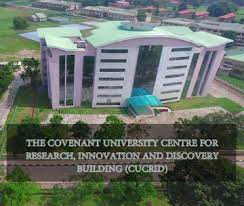
COVENANT UNIVERSITY (CU) SCHOOL FEE FOR THE 2026/2027 ACADEMIC SESSION
The management and Authorities of Covenant University have released and published the institution tuition fees and other important payments for the 2026/2027 academic session for UTME, D.E students, and Transfer students.
The acceptance fee should be paid upon acceptance into the university because the payment of the fee symbolizes your acceptance of admission into the school and it must be paid as soon as possible to safeguard your admission. Failure to pay the tuition fee when due may cause you to lose your admission
The table below shows the school fees for freshers of Covenant University (CU) for 2026/2027 sessions as approved by the School Management.
COVENANT UNIVERSITY (CU) SCHOOL FEE FOR THE 2026/2027 ACADEMIC SESSION
| S/N | PROGRAMME | FEES (NGN) |
| 1 | Accounting | 937,500.00 |
| 2 | Banking and Finance | 937,500.00 |
| 3 | Business Administration | 937,500.00 |
| 4 | Demography & Social Statistics | 937,500.00 |
| 5 | Economics | 937,500.00 |
| 6 | Industrial Relations & Human Resources Management | 937,500.00 |
| 7 | International Relations | 977,500.00 |
| 8 | Marketing | 937,500.00 |
| 9 | Policy & Strategic Studies | 977,500.00 |
| 10 | Political Science | 977,500,00 |
| 11 | English Language | 977,500.00 |
| 12 | Psychology & Counselling | 977,500.00 |
| 13 | Sociology | 937,500.00 |
| 14 | Mass communication | 977,500.00 |
| 15 | Public Relations & Advert. | 977,500.00 |
| 16 | Architecture | 977,500.00 |
| 17 | All Engineering Courses | 1,002,500.00 |
| 18 | Computer Science | 977,500.00 |
| 19 | Biochemistry | 984,500.00 |
| 20 | Microbiology | 984,500.00 |
| 21 | Industrial Physics/ Mathematics | 984,500.00 |
| 22 | Industrial Chemistry | 984,500.00 |
| 23 | Building Technology | 977,500.00 |
| 24 | MIS | 977,500.00 |
| 25 | Estate Management | 977,500.00 |
| 26 | Biology | 977,500.00 |
The list of fees the school Management requires the freshers to pay in the first session is in the table below;
| S/N | FEES | AMOUNT (NGN) |
| 1 | Registration, Tuition &Exam | 472,000.00 |
| 2 | Hostel Accommodation | 185,000.00 |
| 3 | Utility | 75,000.00 |
| 4 | ICT Development | 25,000.00 |
| 5 | Laboratory/ workshop fee | 40,000.00 |
| 6 | ICT Training | 30,000.00 |
| 7 | Virtual Library | 15,000.00 |
| 8 | Internet | 15,000.00 |
| 9 | Matriculation | 15,000.00 |
| 10 | ID Card | 15,000.00 |
| 11 | Result Verification | 5,000.00 |
| 12 | TMC kit fee | 15,000.00 |
| 13 | EDS | 6,000.00 |
| 14 | College Dues | 2,000.00 |
| 15 | Field Trip | 7,500.00 |
| 16 | Caution Fee | 25,000.00 |
| 17 | Books | 15,000.00 |
| 18 | Medical Deposit | 10,000.00 |
| 19 | Medical Test | 15,000.00 |
| 20 | Labcoat &Tools (Eng) | 25,000.00 |
| 21 | Labcoat & Tools (Biochem./ Microbiology/ ind. Phy/ Math) | 7,000.00 |
Important notice to all freshmen
- Students are to note that payment can be made twice that is 60% and 40% for the first and second semesters respectively.
- Students are also advised to make payments early to avoid extra charges during late registration.
- All fees should be paid to the designated banks and failure to make payment on time can lead to an inability for a student to seat for the semester exams.
- For more information on the method of payment and how to pay the fees to visit the school’s official website at www
What the school fees figure does and does not cover
The amount quoted above is the main school fee. In Nigerian universities this is rarely the total you pay. Budget for these separately:
- Acceptance fee — a one-off payment made by fresh students to confirm admission, usually before registration and often non-refundable
- Accommodation — hostel fees are charged separately, and off-campus rent is normally higher
- Departmental and faculty levies — these vary considerably between departments
- Medical screening for fresh students
- ID card, library, laboratory and sports levies
- SUG and student association dues
- Textbooks, handouts and practical materials
As a private university, fees here are considerably higher than at federal or state institutions and are typically charged per session. Confirm exactly what is bundled into the quoted figure — some private universities include accommodation and feeding, others charge these separately.
Fresh students pay more than returning students
Almost every Nigerian university charges fresh students more in their first session, because acceptance fee, medical screening, ID card processing and registration levies all fall in year one. When comparing figures online, check whether the amount quoted is for a fresh or a returning student — they are rarely the same.
How to pay your school fees
- Log in to the student portal using your matriculation or application number.
- Generate your invoice for the session. Federal institutions commonly use the Remita platform, which produces a Remita Retrieval Reference (RRR) number.
- Pay through an approved channel — bank branch, internet banking, USSD or card, depending on what your institution accepts.
- Keep your receipt. Print it and save a digital copy. You will need it for registration, and disputes are far harder to resolve without proof of payment.
- Complete course registration once payment reflects on the portal.
Warning: pay only through your institution’s official portal or approved bank channels. Never pay school fees into a personal account, and be sceptical of anyone offering to process fees on your behalf at a discount.
Payment deadlines and late penalties
Most Nigerian universities set a fee payment deadline each semester and charge a late payment penalty after it, with some blocking course registration or examination entry entirely for unpaid students. Check your institution’s academic calendar and do not rely on informal extensions circulating on social media.
Struggling with fees? Funding options for Nigerian students
NELFUND — the Federal Government student loan
The Nigerian Education Loan Fund (NELFUND) is a Federal Government initiative created to remove financial barriers to higher education. Nigerian students in approved tertiary institutions can apply for support with tuition and, in some cases, upkeep.
Applications are made through the official NELFUND portal. Verify eligibility, required documents and current terms on the official website at nelf.gov.ng — and never pay anyone to process a NELFUND application for you. It is free to apply.
Other funding routes
- State government bursaries — most states run bursary or scholarship schemes for their indigenes. Contact your state scholarship board.
- Federal scholarship schemes such as the Federal Scholarship Board awards
- Corporate scholarships from NNPC, Shell, MTN Foundation, Agbami, PTDF and others, usually advertised annually
- Institutional scholarships — many universities offer merit awards for high-performing students. Ask your faculty office.
Fully funded study abroad as an alternative
If funding your degree in Nigeria is proving difficult, it is worth knowing that several fully funded international scholarships cover tuition, accommodation and flights entirely — meaning you pay nothing at all. These are competitive, but they cost nothing to apply for:
- Mastercard Foundation Scholars Program at UBC — fully funded Master’s in Canada, including flights and a laptop
- Chevening Scholarship — fully funded UK Master’s for Nigerians
- DAAD EPOS Scholarship — fully funded Master’s in Germany
- Commonwealth PhD Scholarship — fully funded doctoral study in the UK
Frequently asked questions
Are these school fees current?
Nigerian universities revise fees regularly, and several institutions have adjusted charges significantly in recent sessions. Treat the figures above as a guide and confirm the current amount on your institution’s official student portal or bursary department before making any payment.
Do school fees differ by course?
Yes. Medicine, engineering, law and the sciences typically attract higher fees than arts and humanities courses, largely because of laboratory, clinical and practical costs. Always check the figure for your specific department.
Can I pay school fees in instalments?
Some institutions permit part-payment or instalment arrangements, others require payment in full before registration. Policies differ and change between sessions — ask your bursary department directly rather than assuming.
What happens if I cannot pay before the deadline?
Consequences vary but commonly include a late payment penalty, inability to register courses, or exclusion from examinations. If you are genuinely unable to pay, speak to the student affairs or bursary office early — some institutions have hardship provisions, and applying for NELFUND takes time.
Always confirm current fees, payment channels and deadlines directly with the institution’s bursary department or official student portal before making any payment.